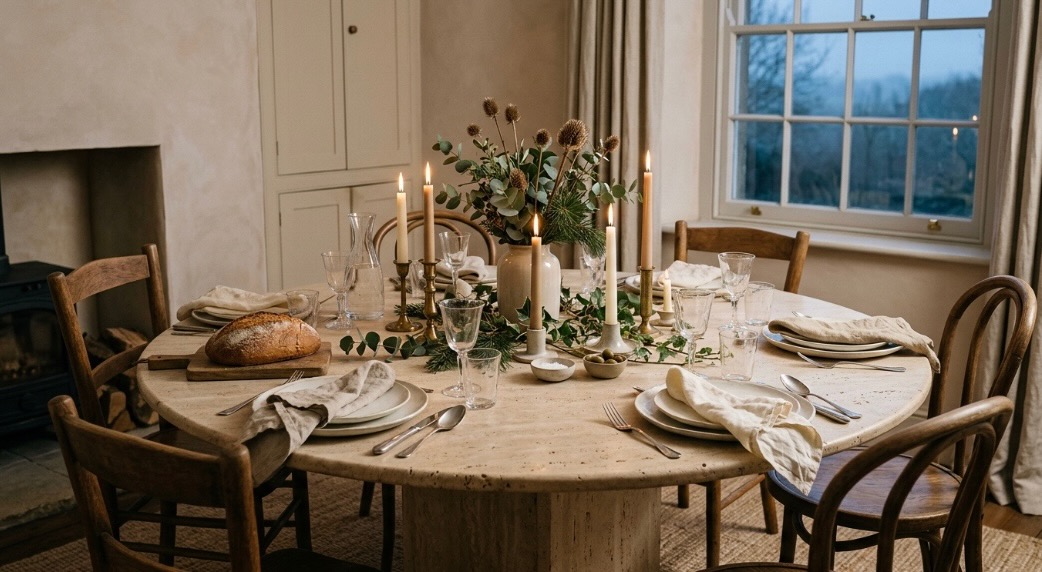
Scroll through any interiors feed, and you will see it: a pale, honey-toned stone table under a low-hanging pendant, dressed with candles and a few sprigs of greenery. Travertine has become one of the most wanted materials in the home, and nowhere is it more striking than in the dining room.
Part of the appeal is the mood it creates. Where glossy marble can feel formal and white quartz a little clinical, travertine is warm, soft and slightly rustic. It suits the way many of us want to live now, with homes that feel calm and natural rather than showy. With the festive season approaching and dining tables about to work harder than at any other time of year, it is worth knowing what you are buying.
What Makes Travertine Different
Travertine is a type of limestone formed around mineral springs. As the water evaporates, it leaves behind layers of stone full of tiny holes and channels, which give travertine its distinctive pitted texture and gentle, linear pattern. It has been used for thousands of years, from Roman buildings to Italian piazzas, and every piece is different.
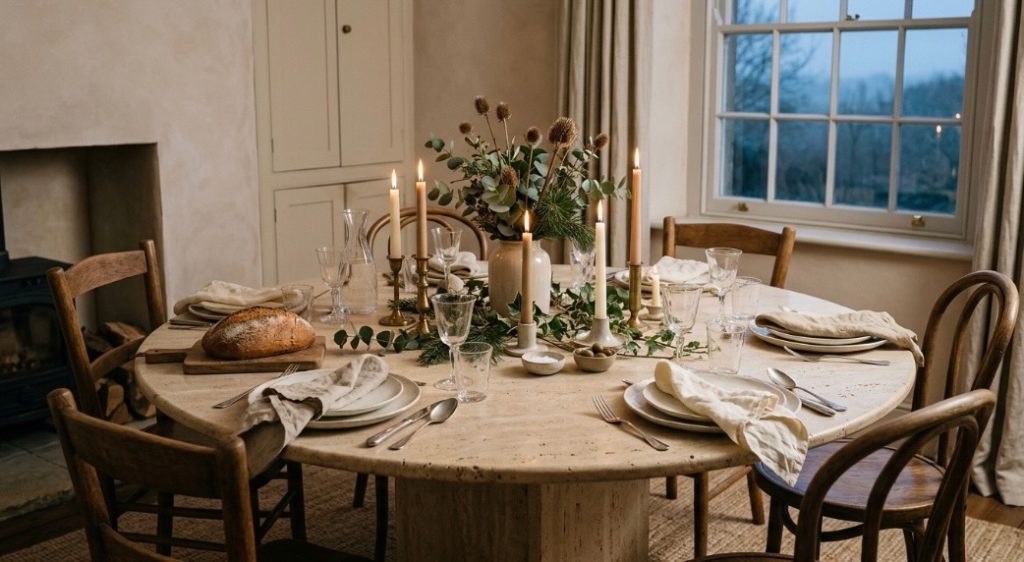
A travertine dining table brings that history into the home. Its warm beige, cream and walnut tones work with oak floors, linen chairs and brass lighting, and its sculptural weight makes it the natural focal point of a room. Many designs pair a travertine top with a solid plinth or pedestal base, which keeps legs out of the way and makes it easier to squeeze an extra chair in at Christmas.
Filled or Unfilled?
One of the first choices you will face is the finish. Unfilled travertine keeps its natural holes, which gives a beautifully raw, textured surface but can trap crumbs. Filled travertine has those holes packed with a resin or cement filler, creating a smoother surface that is far more practical for everyday eating.
Finishes vary too. A honed finish is smooth and matte, which suits the relaxed look most people are after. A polished finish is shinier and slightly more resistant to marks, but more formal.
Living With It
Like marble, travertine is a natural stone that is sensitive to acids. Wine, lemon juice, vinegar and tomato sauce can etch the surface if left to sit. That does not mean it is fragile. It simply means a little care goes a long way.
Keep the stone sealed, and reseal it when water stops beading on the surface. Use placemats and coasters, especially under glasses and hot dishes. Wipe up spills quickly with a soft cloth and warm water, and avoid harsh or acidic cleaners. Over time, travertine develops a soft patina that many owners love, and small marks tend to blend into its natural character.
Choosing the Right Shape
Round tables are sociable and work well in smaller dining spaces or kitchen-diners, where everyone can see and talk to each other. Rectangular and oval tables suit longer rooms and larger families, and are easier to extend for a crowd. Allow around 60cm of table edge per person and at least 90cm of clear space around the table so chairs can be pulled out comfortably.
A good dining table is where birthdays, homework, long Sunday lunches and Christmas dinners happen. Travertine brings warmth and character to all of them, and with a little care, it will be at the centre of family life for many years to come.
Enjoy reading more in home and leisure.